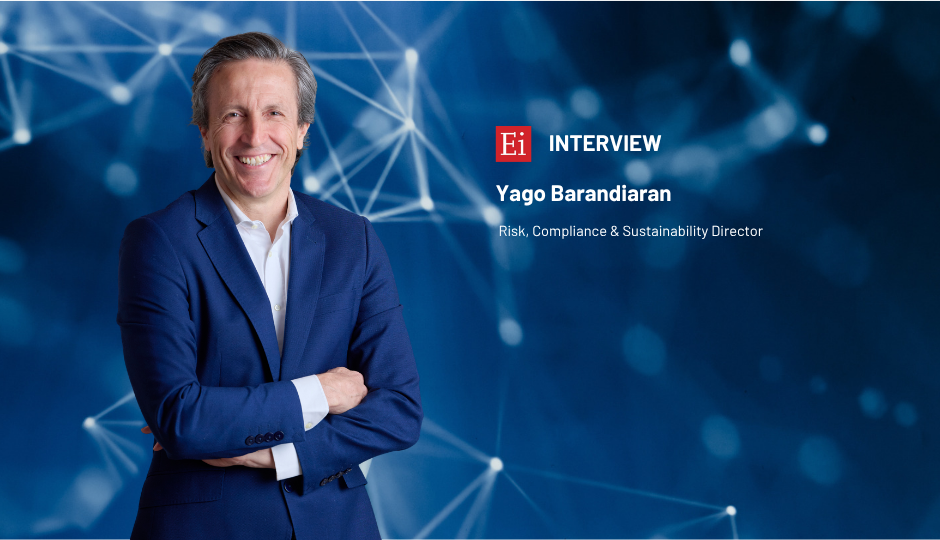
Artificial intelligence has become one of the key drivers of business transformation, creating new opportunities to improve efficiency, automate processes and accelerate innovation. At the same time, its rapid evolution is bringing significant challenges in areas such as regulation, access to technology and governance. In this interview for Estrategias de Inversión, Yago Barandiaran, Risk, Compliance & Sustainability Director at DOMINION, discusses the strategic role of artificial intelligence within the company, the challenges that will shape its development in the years ahead, and how DOMINION is driving a responsible, flexible and business-oriented approach to AI adoption.
What role is artificial intelligence playing across the different sectors in which DOMINION operates (industry, telecommunications and infrastructure)? What differences have you observed across the various strategic markets where DOMINION is present?
To answer that question, it is worth briefly explaining how this field has evolved with the emergence of generative artificial intelligence.
Until just a few years ago, we mainly worked with two types of use cases. On the one hand, there were complex projects in which we used algorithms and machine learning techniques to identify behavioural patterns and help our clients improve their processes. However, this was still a very limited field, focused on highly specific use cases that required a significant level of technical expertise.
On the other hand, there were solutions such as Robotic Process Automation (RPA), which were highly deterministic. Specific rules were defined, introduced into the system, and the system would always produce the same outcome. The drawback was that even the smallest change could cause the solution to stop working properly.
That has essentially been the landscape over recent years. We have seen applications across different sectors, with particularly relevant use cases in utilities, banking, telecommunications and certain industrial environments where predictive capabilities delivered significant value.
The arrival of generative AI has changed everything. We now have access to a much broader range of possibilities, making it no longer meaningful to talk about applications limited to a single industry. This is a truly cross-cutting technology.
From a geographical perspective, and based on our own experience, we operate in more than thirty countries and have not observed major differences between markets. I am referring to the current stage, shaped by the rapid development of generative AI over the last two or three years.
We have identified highly interesting use cases not only in Spain, where our headquarters are located, but also across Europe, Latin America and North America.
In fact, we run an internal entrepreneurship programme through which we encourage our business units to submit innovation projects, whether they are ideas they would like to develop or initiatives that are already underway. This year we have received particularly promising proposals, many of them based on artificial intelligence, from countries such as Colombia, Mexico and Canada. The geographical diversity of these initiatives is therefore very broad.
For that reason, I believe that location is less important than where process knowledge resides. What truly matters is having professionals who understand their business in depth and who can use that expertise to identify where artificial intelligence can create value and improve the way they work.
In a context of geopolitical and technological uncertainty, how does dependence on models developed by major international companies affect organisations?
We are operating in a period of significant geopolitical and technological uncertainty. From a geopolitical standpoint, beyond the current international landscape and the events unfolding around the world, the field of artificial intelligence is facing increasingly important challenges.
We are already seeing restrictions affecting the use of certain AI models and access to key technological infrastructure. Some equipment and components can no longer be commercialised in specific countries. More recently, even in the United States, discussions have emerged around preventing certain AI models from being released until they have passed government reviews. We are entering a new phase characterised by uncertainties that could influence the future development of this technology.
At the same time, important technological shifts are taking place. The ability to make large capital investments (CAPEX) is becoming more constrained, while new limitations are emerging around energy availability and access to the infrastructure required to develop and operate AI solutions.
These constraints initially affect the companies developing the technology, but they will inevitably have an impact on their customers as well. Furthermore, they reinforce the geopolitical restrictions we have already mentioned.
In my view, access to artificial intelligence will eventually become part of major international trade agreements. It will become another strategic element in negotiations between the world's leading economic and political blocs.
There are no simple solutions to address this scenario. Every company must find its own path and strike the right balance. At DOMINION, one of the measures we are taking is diversifying our technology providers. However, the objective is not simply to work with more suppliers, but to develop a strategy that guarantees flexibility.
For us, cost control will become increasingly important. We also seek to use solutions that allow us to switch between models whenever necessary, avoiding excessive dependence on any single technology or provider. Wherever possible, we avoid making overly rigid long-term commitments.
This is by no means an easy task and, as I said, there is no magic formula. The key is to remain flexible and maintain the ability to adapt in an environment that is evolving at an extraordinary pace.
What adoption strategy are you following across the organisation?
Our approach is essentially built around two levels. On the one hand, we focus on individual and departmental adoption; on the other, on intelligent process automation.
At the first level, our objective is to provide different departments with access to the artificial intelligence tools that are already available, particularly where they can deliver the greatest value. This includes collaborative capabilities as well as agentic AI functions, whose adoption is expected to grow significantly over the coming years. That said, we are taking a measured and cautious approach.
We follow several key principles. We do not rely on a single tool, nor do we believe there is a one-size-fits-all solution. Technology must adapt to the specific needs of each department, and its adoption must be justified by a clear business case. For this reason, we respond to demand rather than implementing a blanket policy of providing the same AI solution across the entire organisation.
The second level focuses on intelligent automation. These are more complex initiatives in which the business units—responsible for identifying processes with improvement potential—work alongside highly specialised technical teams.
We have developed strong in-house capabilities and dedicated teams, while also collaborating with external partners whenever appropriate. Our model therefore combines internal expertise with external support.
Before launching any project, we ask ourselves a number of important questions: which processes are worth automating, how automation should be implemented, what organisational changes it will require and, above all, what business objective we are trying to achieve. Every process must undergo a rigorous assessment before any action is taken.
These two levels are supported by a governance model that we are currently developing around four main pillars. The first is security; the second is cost control, which I mentioned earlier; the third is the identification and sharing of successful use cases across the company; and the fourth is regulatory compliance.
Artificial intelligence regulation is already a reality, and we must ensure that every AI project and every automation initiative is assessed with the necessary level of rigour to guarantee full compliance across the organisation.
Which processes have seen the greatest productivity improvements through automation within the company?
We have seen improvements across a wide range of activities. That is, in fact, one of the greatest strengths of the AI tools now available: their ability to deliver value across multiple business areas.
That said, we have achieved the most significant results in environments where large numbers of people, vehicles and materials interact, and where many repetitive tasks are carried out. These are precisely the types of operations where we are identifying the most successful use cases and concentrating a significant part of our efforts.
Examples include the services we provide for the deployment and maintenance of networks for telecommunications operators, utilities and logistics companies.
One particularly representative example can be found within our Grid Services business, which focuses on the deployment of power infrastructure. Thousands of professionals work in this area and, in just one of its activities, we have recorded more than 40 million interventions in a single year. This means we manage an enormous volume of operations that are tracked, recorded and fully traceable.
In this context, artificial intelligence can generate considerable value. It enables us to ensure that field technicians have all the information they need before arriving on site, verify compliance with safety procedures, confirm that vehicles and equipment meet operational requirements, and quickly certify completed work for our customers.
Operations of this kind provide the ideal environment for deploying intelligent automation solutions because they improve efficiency, enhance service quality and strengthen operational traceability.
Ultimately, it is important to understand that artificial intelligence and automation are not objectives in themselves. They are tools that help us improve processes, optimise operations, increase efficiency and, where necessary, transform the way work is carried out. The ultimate goal is always the same: to do things better.
How has the demand for technology talent changed over the past two years?
Demand is changing, and we are still very much in the middle of that transformation. For those of us who have been working in technology for many years, this shift is reminiscent of previous technological revolutions.
Artificial intelligence is becoming a core professional skill, much like email, office productivity software or spreadsheets became essential capabilities in the past. Knowing how to use AI will soon be regarded as a fundamental competence expected of virtually every professional.
At the same time, there remains strong demand for specialists in intelligent automation. These projects require highly specific expertise and capabilities that are not yet widely available.
As a result, organisations need to combine both approaches. On the one hand, they must recruit professionals with advanced technological expertise. On the other, they need to help existing employees develop new AI-related skills.
The goal is to maximise the combination of technological expertise and deep process knowledge. This can be achieved either by bringing together specialists from both disciplines or by training internal professionals who are capable of integrating these two areas of expertise.
We are still on that journey. It is a new and rapidly evolving
How is DOMINION preparing for the implementation of the AI Act?
The regulation is already in force and, as I mentioned earlier, at DOMINION we are developing an AI governance framework built around four key pillars: security, cost control, the sharing of best practices and regulatory compliance.
We see the European AI Act not only as legislation that we must comply with because it directly affects our business, but also as a valuable framework for mitigating the risks associated with the misuse of artificial intelligence technologies.
Our approach is based on three main lines of action.
First, we establish clear guidelines defining what can and cannot be done, as well as the conditions under which AI tools should be used.
Second, we place a strong emphasis on training. We educate our professionals not only in the practical use of artificial intelligence, but also in the regulatory framework and the responsibilities associated with deploying these technologies.
Finally, we maintain an active oversight role. The first step is to ensure visibility over all AI initiatives being developed across the organisation. To achieve this, we work closely with our different business units and departments, establish common criteria and carry out specific assessments of projects that may involve higher levels of complexity or risk.
We also want our business units to develop a critical understanding of the AI models they use or promote. The objective is not simply to supervise projects from a central function, but to extend that responsibility across the entire organisation.
Ultimately, we aim to maintain a pragmatic approach. On the one hand, we want to encourage the adoption of artificial intelligence because we firmly believe in its potential. On the other, we must ensure regulatory compliance while minimising risk. Our role is to strike the right balance between these two priorities.
Do you believe Europe is striking the right balance between innovation and the protection of rights?
I believe there is still room for improvement.
From an innovation perspective, there is broad consensus that Europe is lagging behind other regions. We are not leading the development of new artificial intelligence models—although there are some notable exceptions—nor are we leading the deployment of the technological infrastructure required to support them, despite having some positive examples.
From a regulatory perspective, however, Europe is ahead. It has been a pioneer in this field and, thanks to the important steps taken by the European institutions, a global conversation has emerged around the need to regulate artificial intelligence. In that sense, significant progress has been made compared to where we were just one or two years ago, although we are still far from having a truly global regulatory framework.
It is also worth remembering that the European regulation began to be drafted several years ago, at a time when we did not yet fully understand the full potential of artificial intelligence. We are still discovering new capabilities, applications and ways of integrating this technology into organisations.
Some adjustments have already been made to the implementation timeline of the AI Act, and I would not be surprised to see further regulatory updates in the future. It would be perfectly logical for the legislation to evolve as our understanding of the technology and its implications continues to grow.
Ultimately, this will always be a delicate balancing act. Regulation is necessary, and I fully support the underlying objective of protecting rights and reducing risks. At the same time, however, regulation can influence the pace at which European companies adopt artificial intelligence.
Finding the right balance is therefore essential. Protecting fundamental rights should not come at the expense of unnecessarily limiting innovation or reducing Europe's long-term competitiveness.
What impact do you expect artificial intelligence to have on the productivity of the Spanish economy over the next two years?
There are many different estimates available. Some reports suggest that artificial intelligence could increase global productivity by anywhere from a few tenths of a percentage point to nearly 1% per year, while others predict an even greater impact when considering its full potential.
Personally, I would not venture to predict how much productivity in the Spanish economy will increase, as there are still too many uncertainties. What I do believe is that the impact will be gradual. Progress will be incremental, and the pace of change is unlikely to be linear.
We also need to consider the potential impact of rising costs. Investment constraints—particularly in terms of capital expenditure (CAPEX)—currently affecting technology developers could eventually translate into higher prices for AI solutions. This may or may not happen, but it is a possibility we need to consider. If costs increase, the adoption of artificial intelligence could slow down, reducing its short-term impact on productivity.
Finally, the outcome will vary significantly depending on the sector, the type of company and even the region under consideration. Not every industry has the same potential for automation, nor do all organisations have the same capabilities to adopt these technologies.
For all these reasons, it is difficult to provide a precise figure. The impact will undoubtedly be positive and will continue to grow over time, but its magnitude will depend on many different factors.
What is DOMINION's biggest AI bet over the next three years?
Our biggest bet is not artificial intelligence itself, but the successful delivery of our strategic plans—particularly the new strategic plan we are currently developing.
We are not embracing artificial intelligence simply because it is a trend or because everyone else is doing it. However, as we have discussed throughout this interview, we firmly believe that AI can play a fundamental role in improving many of our processes and transforming the way certain activities are carried out.
At DOMINION, we see artificial intelligence as a key tool for increasing efficiency and productivity, while also changing the way we perform many tasks.
It will therefore become a major enabler of our future growth. More importantly, it fits perfectly with the way we define ourselves as a company: combining technology, deep process expertise and strong execution capabilities.
Artificial intelligence complements that model exceptionally well and will undoubtedly play a significant role in DOMINION's development over the coming years.
"Access to AI will be a key factor in trade agreements between the world's major economic blocs"
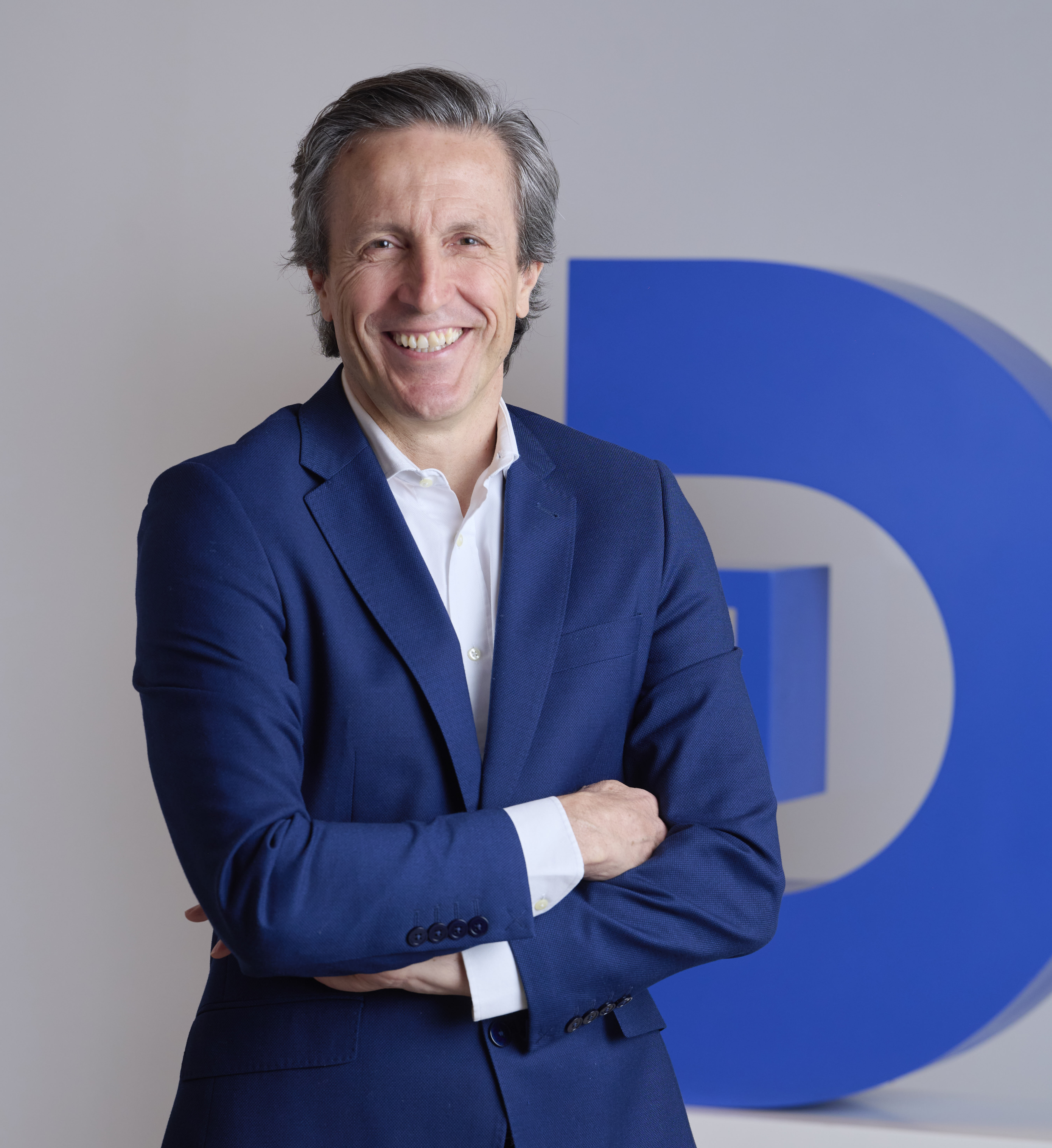
Yago Barandiaran
| Risk, Compliance and Sustainability Director